Showing posts with label Israel. Show all posts

Wednesday, June 1, 2016

2 Years of Modi: 'Branding India as a Global Master'

Rise of Modi or India
Keeping aside all statistical affirmative indicators of India's growth, in last 2 years, the present government has unquestionably been successful in framing Nation’s image as an emerging lumbering Elephant in South-East Asia.
Not to mention the accomplishments and actions may differ from promise, nevertheless New Delhi, so far, drew worldwide attention as an unfolding economic power. 

It can undeniably be a unique coincidence of emergence of BJP government, which completes 2 year in power on 25th of May, 2016, and surge of global crisis.
000_Del6377111-e1419003097975© Times of Israel
Rise of ISIS, China's de-accelerated economy, Western stagnancy and fall of global oil prices, complimented the incumbents, who came with full majority for the first time Indian electoral history (Only party after Congress), to stage an optimistic image of Country at international stage.

Besides emergence of new era of terrorism, fall of regime after regime in Middle East and refugee/migrants crises in Middle East, North Africa and Europe have been focal point of global discourse.

Meanwhile, India kept itself occupied in scaling the length and breadth of economic world.
Mapping the East and West

Less than 2 years of his tenure he scaled world form Magnolia in Far East to far Seychelles off East Africa, where no Indian premier ever paid attention. He led India emerge as a mediator power between western and eastern power.
Modi, not only took lead in aligning the far eastern countries like Magnolia, Seychelles, Indian oceans island countries Mauritius, Fiji, and Central Asian countries etc, which although do not have significance on world map, but do play keyhole in shaping India's aspiration of permanent member of UNSC.

After new premier swept to power in 2013, China embarked itself in eradicating deep rooted corruption in bureaucracy, intensifying cracked down on public and media outrage, while, Obama administration could not heed beyond sanctioning Russia’s re-conquest of Eastern Europe,  and unbalancing Arabian peninsula by tabling the nuclear agreement.

On one hand, Putin invested most his energy in reviving SOVIET legacy, US has been successful in inundating former SOVIET stronghold Cuba, most of the world discourse remained between migrant and UK's realignment from EU.
On the other hand, sensing the vacuum in global dias, Modi slated himself as a joining link between East and West, emerging as a leader with influential and decisive power.
Balancing the Middle-East

Since mid 2014, as Saudi's oil dominance has been on downhill, and Iran's nuclear deal imbibed another kind of contention in Arabian Peninsula. At the same, time, Modi, not only successfully balanced China and USA, but Shia and Sunni along with Jewish State, with recent his visits to Saudi Arabia and Iran, and foreign minister’s Israel visit.

Even he has been successful in mapping the largest landlocked part of world, central Asia, and with Chabahar port agreement with Iran, Modi assured India's opening in Central Asia, which has been neglected from global arena after fall of SOVIET, even having a big chunk of natural resources there.

Last 2 years has seen far intensive foreign policy under Modi administration which India never seen before.

And, amid the entire furore Modi is going to address joint session of US Congress, the world’s most power full legislative body, which decided the discourse of world for decades.

However, even after making felt India's presence from Far East to West, Modi administration has been failed in countering not only Pakistan, but Nepal which is considered to be India’s little brother for centuries.


Although India has presence in African nations, but still very less aligned with Latin American nations, where still Indian needs to search grounds.

Monday, May 16, 2016

Israel’s Unexplored Heritage Sites: From History To Tourism


Israel is comprised of the ancient city of Jerusalem and modern city of Tel Aviv, but between these two well-known sites, are less-known heritage sites which hold stories of thousands of years to tell. Spanning from ancient town of Acre in North to Be’er Sheva in southern deserts, the remnants definitely illustrate the narrative of thousands of years of civilizations that nurtured on this land. However, these places have been matter of importance for archaeologists and historians, but now tourists from across the world have been enchanted and enthusiastic to sense the culture and heritage of primeval times. Here are a few of the unexplored heritage sites in the hall of the fame in the land of Israel.


Acre

Among one of the primordial cities in Israel, Acre (Akko) is a Crusader era port town, situated in north of country. The coastal town is a unique melting point of East and West, well-complimented with magnificent structures, testaments to the Crusader and Ottoman periods. Mosques and Christian monasteries alongside underground passages and high-walled alleys makes it mysterious and unique to explore. The remarkable fortified city walls, Turkish baths, halls built by Knights Templar and Crusader buildings are the undeniable examples of historic architectural proficiency.
  
Acre City © wikipedia


Abu Gosh

There is no more quintessential an example of coexistence of humanity than the village of Abu Gosh, on the outskirts of Jerusalem. The Muslim village is home to a Romanesque and Early Gothic-style twelfth century Crusader church, today a Benedictine Monastery, where even Jews, Christians and Muslims sing prayers together in Hebrew. The monastery is run by a group of priests and nuns with shared co-operation with the local Muslim population, which makes the place unique across the region. Notably, the Abu Gosh village, built during Ottoman period, has also become Israel's Hummus capital in recent years.


Abu Gosh Monastery © wikimedia


Be'er Sheva

Apart from walled city from the Israelite monarchic period in Tel Be’er Sheva, a UNESCO heritage site, the desert capital comprises numerous sites of historic importance from Ottoman Period to British mandate. Founded more than more 3700 years ago, when biblical father of Jewish people, Abraham, arrived there, present day Be’er Sheva houses centuries-old structures such as the Governor’s house, now the Negev Museum of Art, and Government House, today a Police Station. The Turkish railway station and hundred-year-old traditional Bedouin market, are among the main attractions, which can easily take visitors back to monarchic cum colonial era.


Hundred year old Turkish Railway Station, Be’er Sheva © wikipedia


 Lohamei Ha’Getaot

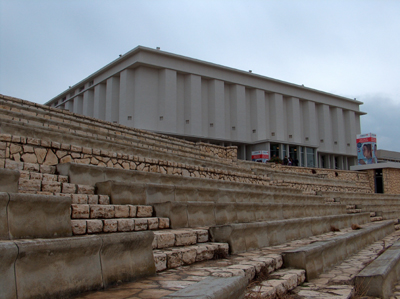
This museum helps to get a better sense of the detriment of holocaust survivors who came from Poland and Lithuania decades ago. After leaving behind everything they had, they found refuge at Lohamei Ha’Getaot  (The Ghetto Fighter). Situated between the town of Acre and Nahariya, Lohamei Ha’Getaot abodes Getto Fighters’s House Museum dedicated to those who fought against Nazis during Warsaw Ghetto Uprising, which is first of its kind in World. This Kibbutz naturally reminds visitors the grief and bravery of holocaust survivors who re-established their lives in a small village in Northern Israel at the foothills of Galilee, after escaping from the Nazis. The Kibbutz also encompasses an aqueduct built in 1815 during Ottoman period, one of the engineering masterpieces of its time.


Ghetto Fighters' Museum © wikimedia


Katsrin:

Among lesser known, but imperative heritage sites, is Talmudic-era town Katsrin located in the heart of Golan Heights, surrounded by breath-taking landscapes. The town embraces the archaeological sites of middle Bronze Age, vindicating the 4000 years old Jewish settlements. Amidst the serenity of the Golan, it is easy to imagine the prosperity of ancient civilizations that once inhabited the town, boasting a magnificent sixth century synagogue. The remains of ancient village and reconstructed homes definitely transport visitors to the Talmudic alleyways.

Talmudic-era synagogue, Katsrin © wikimedia

Monday, March 28, 2016

Tel Aviv: A Cycle Paradise

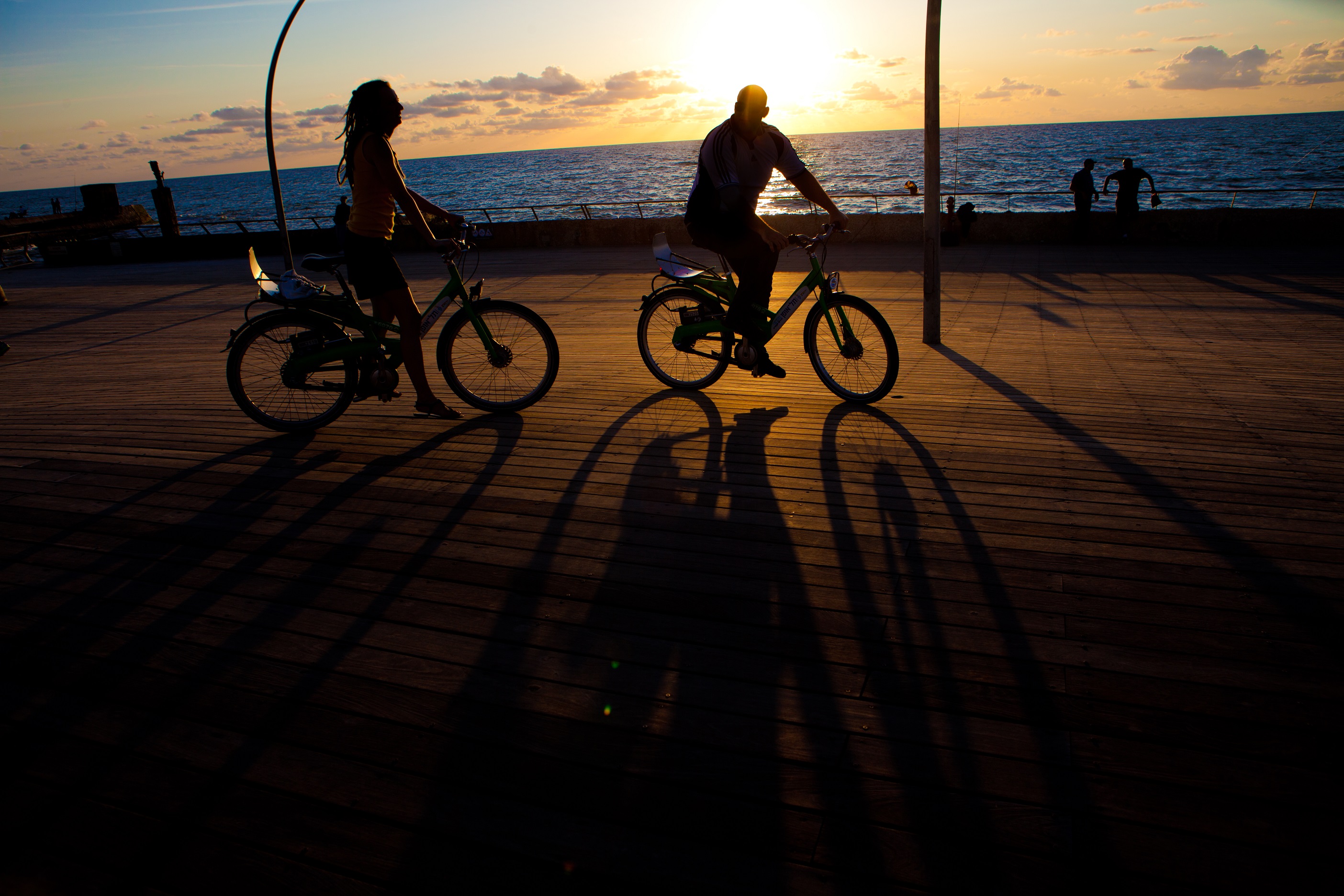
Cycling is hard to resist in Tel Aviv, a haven for bike lovers and the only city in Middle East with an incredible infrastructure for cyclists. Especially in the last few years, cycling has become increasingly popular not only as a form of transport in the city,  but for sports and leisure. There is even a remarkable rental system for bicycles, Tel-o-Fun, which enables people to rent bicycles at any time at hundreds of rental stations around city. This is what makes the White City a cycling paradise. Here are some of the best cycling spots in White City to fully enjoy the activity.


10532313615_8dd5c24da1_o (1)Tel Aviv Port © israelphotogallery/flickr

Tel Aviv Port

Tel Aviv Port it is one of the best tourists spots the in City, with its spacious trail for cycling along the Mediterranean Sea. The place is full of visitors, cafes and fun that make cycling even more enjoyable. It’s not difficult to find one of the Tel-o-Fun Cycle stands at Port, and they only cost a few bucks.

UntitledHayarkon Park © thelastdon/flickr 

Hayarkon Park

Hayarkon Park is the largest park in Tel Aviv, located on the city center’s outskirts. The park has long cycling trails that stretch from Ramat Gan to Tel Aviv’s Port and is one of the biggest cycling spots in the city. Complemented with stunning greenery, a magnificent lake, climbing walls, rowing clubs, water parks, petting zoos and more, it is an ideal destination for a long day of cycling and time spent outdoors.

Untitled1Yarkon River ©  zalul/flickr

Yarkon River 

Besides biking on the beach, there are plenty of other gorgeous options, including cycling by the river. As only river in Tel Aviv, the Yarkon passes from different parks in the vicinity, from Ramat Gan to Tel Aviv Port, and has miles of cycling track on both sides. It is well complemented with beautiful landscape, shady orchards, boating clubs, fun parks, and fields to have some rest and enjoy a  refreshment.

UntitledJaffa Port ©  hemokerem/flickr

Jaffa Port to Tel Aviv Port

Between the fishing harbours of Jaffa Port to Tel Aviv Port is a long 5 km biking path along the beautiful Mediterranean sea, which is, of course, perfect for biking. It’s absolutely thrilling to spend a day biking with friends and picnicking on the seaside, with palm trees, joggers and tourists all around.

15111950458_5de889b360_kGordon Beach © vessokolev/flickr

Gordon Beach

Miles of track flooded with people and recreational activities make Gordon Beach a fantastic place for bike lovers.  It has plenty of space, with wide trails for cycling and a couple of cycle rental stands in the area. The beach is a hotspot for tourists and locals alike, which makes it all the more exciting to take your bike there.

Sunday, December 6, 2015

Like Diwali, Jews Celebrate 'Hanukkah'

                     "Hanukkah is Jewish Festival of Lights, as Diwali for Indians" 
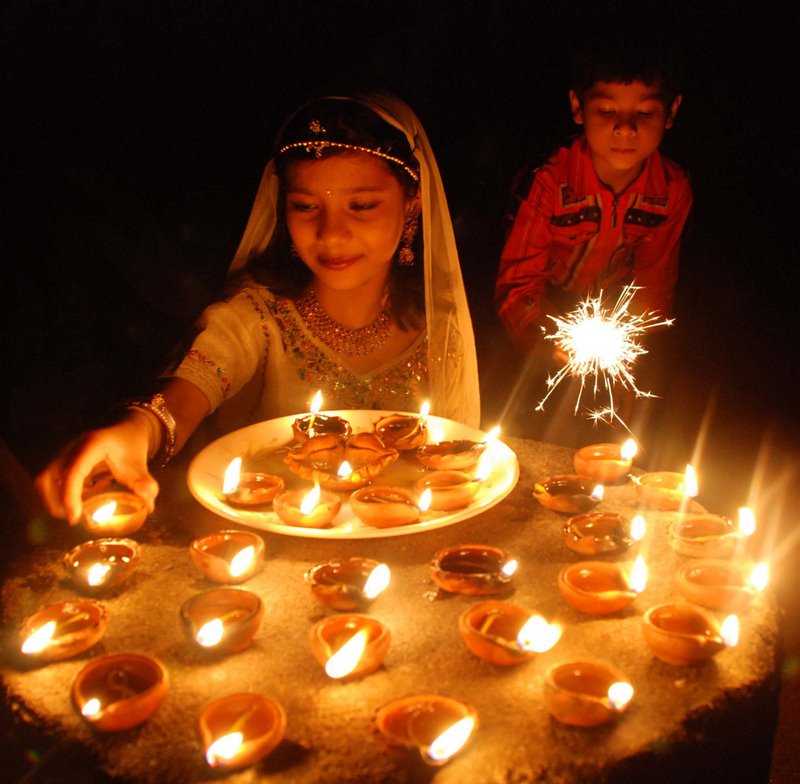
Lighting up houses with bright candles, chanting songs of victory and peace, distributing sweets and gifts and wishing each other well-being and prosperity, this is how Hannukah is celebrated, also known as the Festival of Lights. Surprisingly, this festival significantly resembles the iconic Hindu Diwali.


Untitled3
Candles and Diyas symbolic of Festival of Light | © abhinabahtt and chosenpeople.com

Diwali Festival

Diwali is another festival of lights observed for five days in India by Hindus. There are many similarities between the two. The Jewish festival of lights, Hanukkah, is celebrated for eight consecutive nights sometime between late November and late December – determined by the Hebrew calendar – in Israel and by Jewish people all over the world. Hanukkah could be called the ‘Jewish Diwali,’ celebrated to commemorate the victory of good over evil since ancient times.
Diwali Celebration | © Pradip Mahato/Flickr
In India, the festival of lights, Diwali, usually falls in October and November – determined by the Hindu calendar – and is celebrated by the lighting of Diyas(lamps/candles) in and around the house and windows, wearing new clothes, preparing special dishes and sweets, opening festive crackers, and giving or receiving surprise gifts from relatives and friends.
In the same way, Hanukkah is celebrated with lightning of candles on the menorah(a candelabrum with nine branches) followed by the chanting of songs and the distribution of presents.
Hanukkah Lights
Hanukkah Lights | © Djampa/Wiki Commons 
Both festivals owe ancient importance, in their respective religion, to instances of war and victory, of good over evil. As per Hindu mythology, Diwali is celebrated in the name of Lord Rama (Hindu God) of Ayodhya, after his victory over the evil Ravana, when the people of Ayodhya lit lamps to celebrate his return and illuminated the whole city.
Diwali is observed for five days substituted by other small festivals including Dhanteras, Chhoti Diwali (Small Diwali), Diwali, Gowardhan Pooja and Bhai Duj.
Hannukah Traditions
The story of Hannukah is the remembrance of the Jewish victory of over the Syrian-Greek Army and reclaiming of the Jewish Holy Temple in Jerusalem over 2,100 years ago. You can visit the sites from the story still today.
DCMinyan_Hanukkah
Hanukkah Celebration © Rebecca Israel/WikiCommons
The story is that the army struck the Holy Temple in Jerusalem, leaving them with only enough oil to light one day, but that it stayed lit for eight consecutive days and nights, once they had won the war. This is why the Jewish people light the menorah using a single candle (the shamash), and commemorate Hanukkah to the mark the miracle that the oil lasted, by lighting candles from right to left each day from one to eight. They also eat deep-fried traditional dishes to symbolize this.

Diwali and Hanukkah, celebrated throughout the world, are the reflection of victory of light over darkness, knowledge over ignorance, good over evil, and hope over despair.

Saturday, November 28, 2015

‘Country of Conflicts’


      24 hours, 365 days, struggle continues between life and death, for the existence, bombs and rockets are every second on the target, here the difference of life and death is merely 15 seconds, they have to escape, and they have to be alive so that they can save their Country. Here the 15 seconds stands for siren warning against air attacks alerting people to hide under bunkers to save their lives.

Every day, there is a new fight for their survival, the word like war, terror, bomb, rocket and missile has now been inherited in the soul of citizens.It’s the story of the Country, which has been in conflicts since its inception in 15th May 1948, which has been fighting for its very existence on Map, where war in is the nerves of its citizens, The State of ‘Israel’- The land of Three Faiths-The Bone of Contention.

In last 70 years the Jewish country has been in direct fight with all its Arab neighbors, who consider Israel as their motherland.

In Israel the young generation prior becoming engineer, doctor, scientist, think of Nation, think of Army the foremost to all. Youths, Students, regardless of their gender and status, go to School and College or Work, only after ensuring safeguard of their nation. What will be use of Education when there will be no Nation to live, this what they have in their souls.

Army is their religion, Army is their culture, and Army is their deed. This is the country where from Prime Minister to Peasant, Richest to Poorest, Laborer to Leader and Capitalist to Communist, everyone is first supposed to serve Nation.

Israel has different connotation of terrorism and its supporters, and has very strong urge to save its citizens.

Israeli cities appears much more like cantonments where each and every corner is captivated with bomb proof bunkers whether it is home, office, ground, university, market, shopping mall, to save precious lives of its citizens, as no one knows when a rockets is going to destroy Jerusalem or Tel Aviv. Palestine and Gaza is round the clock preparing to launch missiles, rocket here.

The State of Israel, on June 5, 1967, was going to be disappeared from Earth, after being invaded by Egypt, Syria and Jordan armies via three sides. It was the situation of Do or Die for Israel who did not leave any stone unturned for the sake of their land, losing more than 1 percent of its citizens in famous Six-day War.


It must be charisma that Israeli Air Force got lead against trio-army, defeating and scooting them from their own land with Israel capturing Gaza Strip, West Bank and Sinai Peninsula up to Suez Canal in Egypt, more than three times of its size.

It is certainly a matter of amaze that how Israelis are accustomed to such kind of life.

Even after being in fight with neighboring countries from 70 years, spending a big chunk of GDP for continuous renovation of military, how it stood up as most advanced country, certainly tells its story of struggle. The Tel Aviv city is among the most modern, beautiful, smart and safe cities in the world. 

Wednesday, October 28, 2015

Indo-Israel Relations

                                                The Undercover Story

                                      
India and Israel relations have been kept secret since before its officials beginning in order to balance the international relations of both countries with appropriate politics and diplomacy. Even before the fall of Soviet Union it has been very good friend of India in all terms, but however, after USSR's collapsed both countries felt to extend officials hand of relationship in 1992, for their vested interest.

In 1971 and 1999 Indo-Pak war, Israel provided secret intelligence information to Indian forces, proved to be best friend when India needed it most.  Unfortunately both the countries have been prey of border disputes and terrorist backed by neighbouring countries since independence for many decades. Israel has emerged stronger per se learning from its past bitter experiences while India, even being such a big country, always failed to curb external violence.

Coming back on the point, however, even after fall of USSR, in order to maintain good relations with Russia, India has not stopped purchasing weapons from Russia, but had to opt to other sources also except USA as it would have proved to be bitter for India-Russia relations. Thus the option was obviously Israel. 

And now Israel is the second largest military partner of India after Russia. 

In 2003, for the first time Israeli Prime Minister Ariel Sharon visited India to extend the bilateral ties even further of weapons. However, although India maintained good relation with Israel but did not attempt to publicize it, due to Indian relations with Arab World and of course to allure the 15 percent of Muslim populations of the Country.


On one hand, Indian National Congress (INC), which ruled India for more than 60 years since independence have a secular image in country in order to protect Muslim Vote Bank and maintain good relations with Arab World did not try to establish relations with Israel. But it was also during their tenure that India-Israel relations started in 1992. 

However, it was originally at the time of government of  Bhartiya Janta Party (BJP) led by Atal Bihari Vajpayee that the diplomatic relations got strengthened between both countries. The BJP government is considered to be backed by Rashtriya Swayamsevak Sangh (RSS) which is extremist Hindu nationalist group of India fighting for Hindu rights. 

Anyhow, after the return of BJP government after 10 years in 2014 the relations between countries are again seems to be strengthening.
Since RSS and BJP are the admirer of Israel and it will not be surprise if any Indian Prime Minister come to Israel for the first time in history.

Recently, Indian president Pranab Mukherjee visited Israel in October 2015 ( first by any Indian President) actually in order to pave the way for the median visit of Indian Prime Minister Narendra Modi to visit Israel with inviting Benjamin Netanyahu to India.

De facto visiting Israel may proved to be very crucial for India relations with Arab countries from where India purchase all crude oil and also millions of Indian work in these countries. But India is in itself has become big and strong country that it must not to be worried about other countries in its international diplomacy.


Thursday, May 28, 2015

Killer Heat Wave

                                                         
                                        Killer Heat Wave


                                 In a country where people are bound to die due to cold waves  and hot winds not even its extreme then it will be called as misfortune of the citizens, whose government can't even save them from the cold and heat condition which are very common in northern and central parts of India leaving hundreds dead every  year.

When administration is helpless in saving people from heat and cold then it is purely dream of saving them from epidemic Swine Flu (H1N1), which claimed more then a thousand lives this winter all over the Country.

In southern east state of Andhra Pradesh and Telangana more than
1400 people have died in past on week, but government could only afford to provide drinking water to people outside that's its. Isn't it sufficient on Government's end and why it did not pre-prepare for such kinds of situations.

It is not the only thing to which we have failed to cope up, If Nepal's devastating Earthquake would have been much more closure to Indian Capital then it would have been reached to stone age. Even after knowing then Swine Flu catch its strength in winter, government did not pre-pared and let it claim more than 1500 lives.


Each summer witness temperature as hot as 50 degree Celsius in most of the Northern and Central parts of  India, leaving thousands striving for drinking water, specially in states like Rajasthan, Gujarat, Madhya Pradesh, but Indian government, in the age of technology where Countries like Israel have learnt how to cultivate in desert,  could not even provide drinking water.

How to Earn From Artificial Intelligence?

Artificial Intelligence (AI) has become one of the most transformative technologies of the 21st century, revolutionizing industries and re...