Showing posts with label Jerusalem. Show all posts

Monday, July 3, 2017

Indian Jews: The Forgotten Diaspora


Which country will not boast of its pervasive Diaspora around the world? Strong bonds with Diaspora always strengthen a nation’s ability to exert diplomatic pressure over rest of the world, just as Israel did it beautifully, by getting hold of Jewish votes in United States.
Yes, there is only one nation on the Earth which denies its allegiance with people of its own origin- India.
 India hasn't been as reluctant in recognizing Hindus, Christians, Muslims, Sikhs, Jain, and Buddhists of Indian origin living all across the world, as it has been for acknowledging more than 80 thousand Indian Jews living in Israel since decades.


India not only denied establishing diplomatic relations with Jewish state, but cut off allegiance with thousands of Indian Jews, who migrated there during 1950s-60s, after Israel opened its citizenship (Aliyah) to all Jews around the world.

Millions of Jews migrated from Europe, North and South America, Ethiopia, Iran, Iraq and India to land of three religions as it opened its border for them wholeheartedly after independence in 1948.

Most of Indian Jews lived in Cochin and Mumbai for more than thousand years since there exodus began 2000 years ago first by Christian crusaders, then Islam.

Wherever they fled for asylum around the globe, curse of anti-Semitism didn't stop them following for millennia, and the place where Jews found actual solace, where they never faced a single instant of anti-Semitism till to date is none other than India.

Major groups of Indian Jews, which comes under category of Sephadi Jews, include Cochin Jews, Bene Israel, Jews of Goa and Baghdadi Jews.


Cochin Jews (Spanish, Portuguese, Paradesi and British Jews) settled in Kerala as merchants and traders, whereas Chennai Jews arrived at Madras during 16th century following their expulsion from Liberia.
Jews of Goa include Portuguese Jews who fled to Portuguese Goa after the commencement of the Inquisition in Portugal.
The Jews arrived from Iraq, Iran and Afghanistan around 250 years ago settled in Surat, were called Baghdadi Jews.
Meanwhile, Bene Israel lived in Karachi, Sindh and Punjab region of undivided India. Many of them moved to Mumbai following partition, while others to Israel after 1948.


After 1948, Indian Jews, settled in different parts of Israel, flourished and assimilate with migrants of other nationalities. Most of them settled in Katamon in Jerusalem, Beersheba, Ramla, Dimona, and Yeruham.

Indian food, language, art, and culture, despite of huge cultural amalgamation, did find recognition in the land of migrants.

It has been India's too much infatuation for Arab countries and Indian Muslims, that no Indian administration, politician or social group ever tried to connect or communicate with Jews with Indian blood.


Indian National Congress, known as hardcore pro-Arab/Muslim Party, deliberately didn't extend any relations with Jewish country to safeguard their innate vote bank, whereas some efforts had been initiated by Hindu Nationalist Bhartiya Janata Party between 1998 and 2003 under Atal Bihari Vajpayee government. 

Hindu nationalist group Rashtriya Swayamsevak Sangh, tried to further its affection for Israel and Jews since Israel’s Independence, but could not make it as political agenda, due its insignificance in Indian scenario.

Present government of Bhartiya Janata Party, backed by Hindu nationalist group Rashtriya Swayamsevak Sangh as its ideological backbone, again in a mood to romance Hindu-Jewish unity, as they there common enemy.

With Modi's visit to Jewish state (First by an Indian Prime Minister) on 4th and 5th July, Indian Jews in Israel and India hopes for reviving their historic connection with their country of origin.

On 5th July, Modi is going to address more than 10,000 Indian Jews in Tel Aviv, to trigger a spark a new Indo-Israel and Hindu-Jews relations.


Sunday, June 18, 2017

Modi’s Israel Visit a New Era of Hindu-Jewish Unity

Why does a tiny besieged Nation, Israel, raises heartbeats of Indian Statesmen? Why are India-Israel aggressively romanticizing relationships, when India is overtly pro-Arab and Israel a hardcore anti-Muslim state?

The roots of India's anti-Israel stand goes 7 decades back when India and Israel got their independence in 1947 and 1948 respectively.


Just after independence from British, out of anti-British-American disposition, because of centuries of servitude, Jawaharlal Nehru, first prime minister of India moulded India into Pro-Muslim-Communist-Soviet state, while Israel became American surrogate in Middle East.

After decades of isolation from Israel under Nehru-Gandhi regime due to pro-Arab policy, Impotent India socialist government, after the collapse of USSR in late 1980s, keeled down to United States, and the route they chose was none other than - Israel.

When USSR failed to aid India against economic and military crisis during 1991-92, India felt obliged to bow down to US via appeasing Jewish state.

In-spite of dramatic shift in India’s foreign policy, as a Pakistan's closest ally, US, seemed reluctant to help India economically and militarily in early 1990s financial crisis, leaving India with only one time-tested option for advanced and affordable military technology- Israel.

Amid all odds, Indo-Israel ties began to gain some momentum during Hindu nationalist Bharatiya Janata Party government led by Atal Bihari Vajpayee (1998-2004), with then Indian foreign minister Jaswant Singh (2000) visiting Israel followed by first visit of an Israeli Prime Minister Ariel Sharon in 2003.

However, all the advancements in bilateral relations made by BJP government were reversed with the return of UPA-1 (Left-Liberals) between 2004 and 2014. Nonetheless, imports of weapons and covert exchange of intelligence information continued.  

The string of bilateral visits has been resumed with the comeback of BJP government since May 2014, and has once again paved a way for rise of two pre-historic civilisations.
In last 3 years of Modi government, Indian home minister Rajnath Singh, President Pranab Mukherjee and foreign minister Sushma Swaraj have had been to Israel, while Israeli President Reuven Rivlin, defence Minister Moshe Ya’alon visited India.


As we celebrate silver jubilee of Indo-Israel ties, let’s hope Narendra Modi’s 3-day visit (first by an Indian Prime Minister) to Israel starting from July 4 would take the Hindu-Jewish unity to greater heights to lead the world.


Monday, May 16, 2016

Israel’s Unexplored Heritage Sites: From History To Tourism


Israel is comprised of the ancient city of Jerusalem and modern city of Tel Aviv, but between these two well-known sites, are less-known heritage sites which hold stories of thousands of years to tell. Spanning from ancient town of Acre in North to Be’er Sheva in southern deserts, the remnants definitely illustrate the narrative of thousands of years of civilizations that nurtured on this land. However, these places have been matter of importance for archaeologists and historians, but now tourists from across the world have been enchanted and enthusiastic to sense the culture and heritage of primeval times. Here are a few of the unexplored heritage sites in the hall of the fame in the land of Israel.


Acre

Among one of the primordial cities in Israel, Acre (Akko) is a Crusader era port town, situated in north of country. The coastal town is a unique melting point of East and West, well-complimented with magnificent structures, testaments to the Crusader and Ottoman periods. Mosques and Christian monasteries alongside underground passages and high-walled alleys makes it mysterious and unique to explore. The remarkable fortified city walls, Turkish baths, halls built by Knights Templar and Crusader buildings are the undeniable examples of historic architectural proficiency.
  
Acre City © wikipedia


Abu Gosh

There is no more quintessential an example of coexistence of humanity than the village of Abu Gosh, on the outskirts of Jerusalem. The Muslim village is home to a Romanesque and Early Gothic-style twelfth century Crusader church, today a Benedictine Monastery, where even Jews, Christians and Muslims sing prayers together in Hebrew. The monastery is run by a group of priests and nuns with shared co-operation with the local Muslim population, which makes the place unique across the region. Notably, the Abu Gosh village, built during Ottoman period, has also become Israel's Hummus capital in recent years.


Abu Gosh Monastery © wikimedia


Be'er Sheva

Apart from walled city from the Israelite monarchic period in Tel Be’er Sheva, a UNESCO heritage site, the desert capital comprises numerous sites of historic importance from Ottoman Period to British mandate. Founded more than more 3700 years ago, when biblical father of Jewish people, Abraham, arrived there, present day Be’er Sheva houses centuries-old structures such as the Governor’s house, now the Negev Museum of Art, and Government House, today a Police Station. The Turkish railway station and hundred-year-old traditional Bedouin market, are among the main attractions, which can easily take visitors back to monarchic cum colonial era.


Hundred year old Turkish Railway Station, Be’er Sheva © wikipedia


 Lohamei Ha’Getaot

This museum helps to get a better sense of the detriment of holocaust survivors who came from Poland and Lithuania decades ago. After leaving behind everything they had, they found refuge at Lohamei Ha’Getaot  (The Ghetto Fighter). Situated between the town of Acre and Nahariya, Lohamei Ha’Getaot abodes Getto Fighters’s House Museum dedicated to those who fought against Nazis during Warsaw Ghetto Uprising, which is first of its kind in World. This Kibbutz naturally reminds visitors the grief and bravery of holocaust survivors who re-established their lives in a small village in Northern Israel at the foothills of Galilee, after escaping from the Nazis. The Kibbutz also encompasses an aqueduct built in 1815 during Ottoman period, one of the engineering masterpieces of its time.


Ghetto Fighters' Museum © wikimedia


Katsrin:

Among lesser known, but imperative heritage sites, is Talmudic-era town Katsrin located in the heart of Golan Heights, surrounded by breath-taking landscapes. The town embraces the archaeological sites of middle Bronze Age, vindicating the 4000 years old Jewish settlements. Amidst the serenity of the Golan, it is easy to imagine the prosperity of ancient civilizations that once inhabited the town, boasting a magnificent sixth century synagogue. The remains of ancient village and reconstructed homes definitely transport visitors to the Talmudic alleyways.

Talmudic-era synagogue, Katsrin © wikimedia

Sunday, December 6, 2015

Like Diwali, Jews Celebrate 'Hanukkah'

                     "Hanukkah is Jewish Festival of Lights, as Diwali for Indians" 
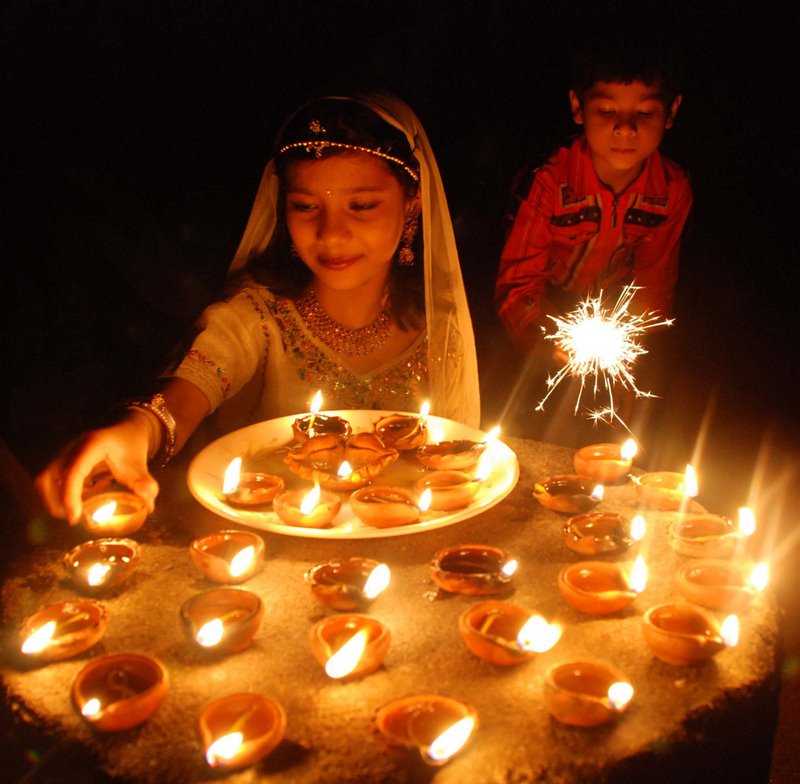
Lighting up houses with bright candles, chanting songs of victory and peace, distributing sweets and gifts and wishing each other well-being and prosperity, this is how Hannukah is celebrated, also known as the Festival of Lights. Surprisingly, this festival significantly resembles the iconic Hindu Diwali.


Untitled3
Candles and Diyas symbolic of Festival of Light | © abhinabahtt and chosenpeople.com

Diwali Festival

Diwali is another festival of lights observed for five days in India by Hindus. There are many similarities between the two. The Jewish festival of lights, Hanukkah, is celebrated for eight consecutive nights sometime between late November and late December – determined by the Hebrew calendar – in Israel and by Jewish people all over the world. Hanukkah could be called the ‘Jewish Diwali,’ celebrated to commemorate the victory of good over evil since ancient times.
Diwali Celebration | © Pradip Mahato/Flickr
In India, the festival of lights, Diwali, usually falls in October and November – determined by the Hindu calendar – and is celebrated by the lighting of Diyas(lamps/candles) in and around the house and windows, wearing new clothes, preparing special dishes and sweets, opening festive crackers, and giving or receiving surprise gifts from relatives and friends.
In the same way, Hanukkah is celebrated with lightning of candles on the menorah(a candelabrum with nine branches) followed by the chanting of songs and the distribution of presents.
Hanukkah Lights
Hanukkah Lights | © Djampa/Wiki Commons 
Both festivals owe ancient importance, in their respective religion, to instances of war and victory, of good over evil. As per Hindu mythology, Diwali is celebrated in the name of Lord Rama (Hindu God) of Ayodhya, after his victory over the evil Ravana, when the people of Ayodhya lit lamps to celebrate his return and illuminated the whole city.
Diwali is observed for five days substituted by other small festivals including Dhanteras, Chhoti Diwali (Small Diwali), Diwali, Gowardhan Pooja and Bhai Duj.
Hannukah Traditions
The story of Hannukah is the remembrance of the Jewish victory of over the Syrian-Greek Army and reclaiming of the Jewish Holy Temple in Jerusalem over 2,100 years ago. You can visit the sites from the story still today.
DCMinyan_Hanukkah
Hanukkah Celebration © Rebecca Israel/WikiCommons
The story is that the army struck the Holy Temple in Jerusalem, leaving them with only enough oil to light one day, but that it stayed lit for eight consecutive days and nights, once they had won the war. This is why the Jewish people light the menorah using a single candle (the shamash), and commemorate Hanukkah to the mark the miracle that the oil lasted, by lighting candles from right to left each day from one to eight. They also eat deep-fried traditional dishes to symbolize this.

Diwali and Hanukkah, celebrated throughout the world, are the reflection of victory of light over darkness, knowledge over ignorance, good over evil, and hope over despair.

Saturday, November 28, 2015

‘Country of Conflicts’


      24 hours, 365 days, struggle continues between life and death, for the existence, bombs and rockets are every second on the target, here the difference of life and death is merely 15 seconds, they have to escape, and they have to be alive so that they can save their Country. Here the 15 seconds stands for siren warning against air attacks alerting people to hide under bunkers to save their lives.

Every day, there is a new fight for their survival, the word like war, terror, bomb, rocket and missile has now been inherited in the soul of citizens.It’s the story of the Country, which has been in conflicts since its inception in 15th May 1948, which has been fighting for its very existence on Map, where war in is the nerves of its citizens, The State of ‘Israel’- The land of Three Faiths-The Bone of Contention.

In last 70 years the Jewish country has been in direct fight with all its Arab neighbors, who consider Israel as their motherland.

In Israel the young generation prior becoming engineer, doctor, scientist, think of Nation, think of Army the foremost to all. Youths, Students, regardless of their gender and status, go to School and College or Work, only after ensuring safeguard of their nation. What will be use of Education when there will be no Nation to live, this what they have in their souls.

Army is their religion, Army is their culture, and Army is their deed. This is the country where from Prime Minister to Peasant, Richest to Poorest, Laborer to Leader and Capitalist to Communist, everyone is first supposed to serve Nation.

Israel has different connotation of terrorism and its supporters, and has very strong urge to save its citizens.

Israeli cities appears much more like cantonments where each and every corner is captivated with bomb proof bunkers whether it is home, office, ground, university, market, shopping mall, to save precious lives of its citizens, as no one knows when a rockets is going to destroy Jerusalem or Tel Aviv. Palestine and Gaza is round the clock preparing to launch missiles, rocket here.

The State of Israel, on June 5, 1967, was going to be disappeared from Earth, after being invaded by Egypt, Syria and Jordan armies via three sides. It was the situation of Do or Die for Israel who did not leave any stone unturned for the sake of their land, losing more than 1 percent of its citizens in famous Six-day War.


It must be charisma that Israeli Air Force got lead against trio-army, defeating and scooting them from their own land with Israel capturing Gaza Strip, West Bank and Sinai Peninsula up to Suez Canal in Egypt, more than three times of its size.

It is certainly a matter of amaze that how Israelis are accustomed to such kind of life.

Even after being in fight with neighboring countries from 70 years, spending a big chunk of GDP for continuous renovation of military, how it stood up as most advanced country, certainly tells its story of struggle. The Tel Aviv city is among the most modern, beautiful, smart and safe cities in the world. 

How to Earn From Artificial Intelligence?

Artificial Intelligence (AI) has become one of the most transformative technologies of the 21st century, revolutionizing industries and re...